

Maxime, can you tell us about your educational background and what led you to the maritime industry?
‘’I finished high school, but school wasn't really for me. My brother was already working at Groupe Océan, and I had the opportunity to join the organization. So I decided to pursue a career at sea and completed several training programs toward that goal.’’
What training courses did you take?
‘’I first took the basic courses, particularly those on Marine Emergency Duties (MED). That's the minimum requirement to be allowed to set foot on a boat. Then, I took a Marine Advanced First Aid course; which is different from first aid in a land-based workplace because, let's face it, the crew isn't within reach of ambulances and other emergency services. I added another string to my bow with confined space work training, because on board ships, you have to work in confined spaces that pose certain risks. I also took a course on using communication radios.’’
What made you want to get into the maritime industry? Did your brother influence your decision?
‘’At first, it was mainly the pay that attracted me. I was 18, just starting out as an adult, and it was a high-paying job. The work schedule was demanding, with 84-hour weeks, 7 days a week, and 12-hour shifts. At the time, I had practically no knowledge of the maritime industry. Apart from my brother, I didn't know anyone who worked in this industry.’’
How did you adjust to life in the maritime industry?
‘’At first, it was pretty rough. Living and sleeping aboard a ship takes some getting used to. When I started, the industry was also more traditional than it is today. Over the years, I managed to find my place and gain confidence. Attitudes have evolved, and the sector has changed a lot since then.’’
You started your career at Groupe Océan as a positioning technician. How has your career path evolved over the past 20 years?
‘’I worked as a positioning technician for about two years. Then, a position as a marine excavator operator opened up. I tried that job somewhat by chance, I liked it, and I guess I was pretty good at it. The company then sent me to Drummondville for training as a hydraulic excavator operator. I ended up working as a dredging operator for 15 years.‘’
It sounds like you really found your calling in that line of work. What came next in your career?
‘’Yes, that's right. After that, I became a foreman, then a superintendant. I worked my way up the ranks. After a few years, I felt like I'd seen it all and decided to switch fields—until I saw a job posting from Riverin Maritime circulating on social media. The company was looking for deckhands and captains in Drummondville, right near my home. I put together my resume, sent it in, and got a call back that very same day.‘’
So that's when you became a captain at Riverin Maritime?
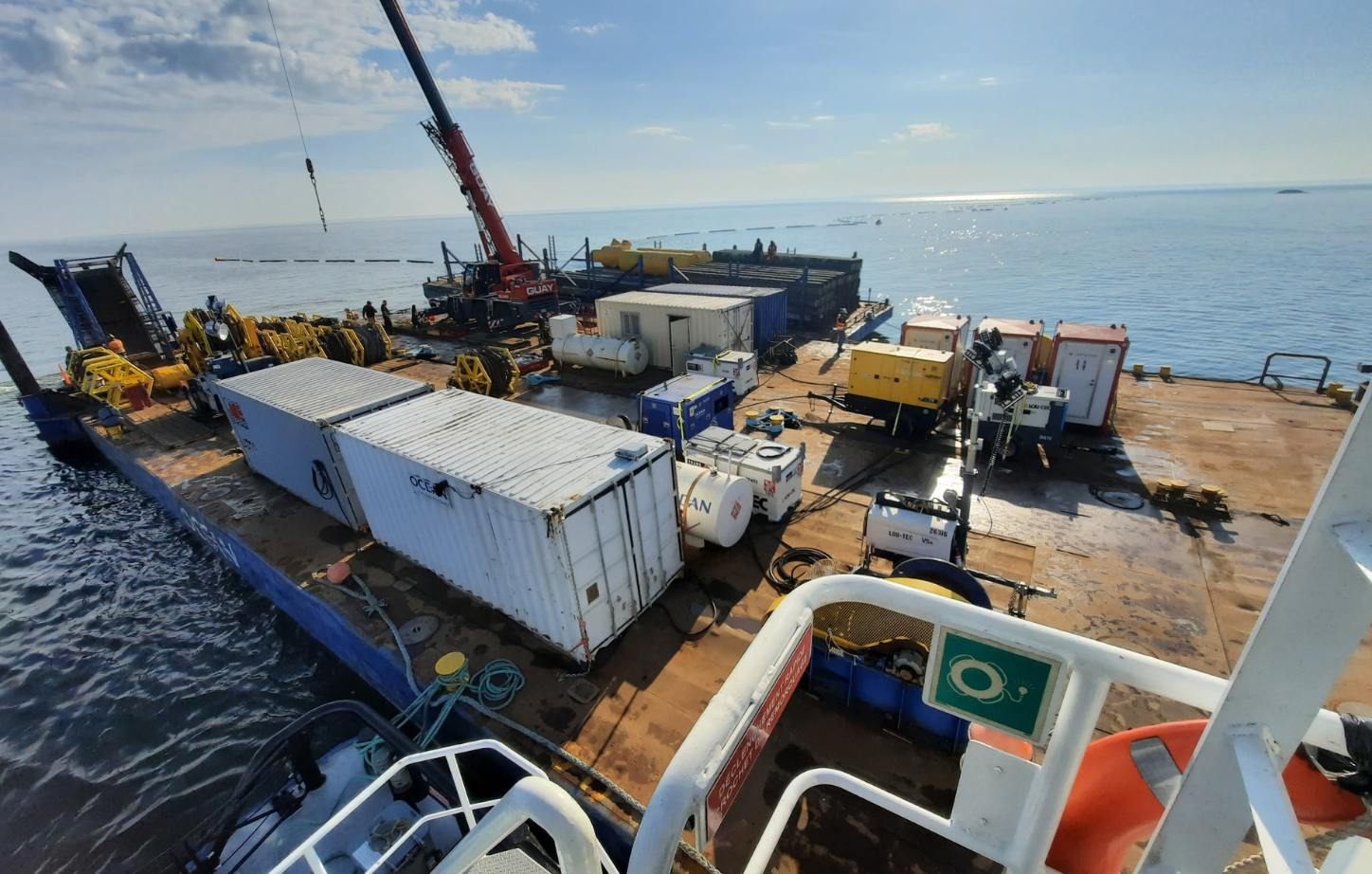
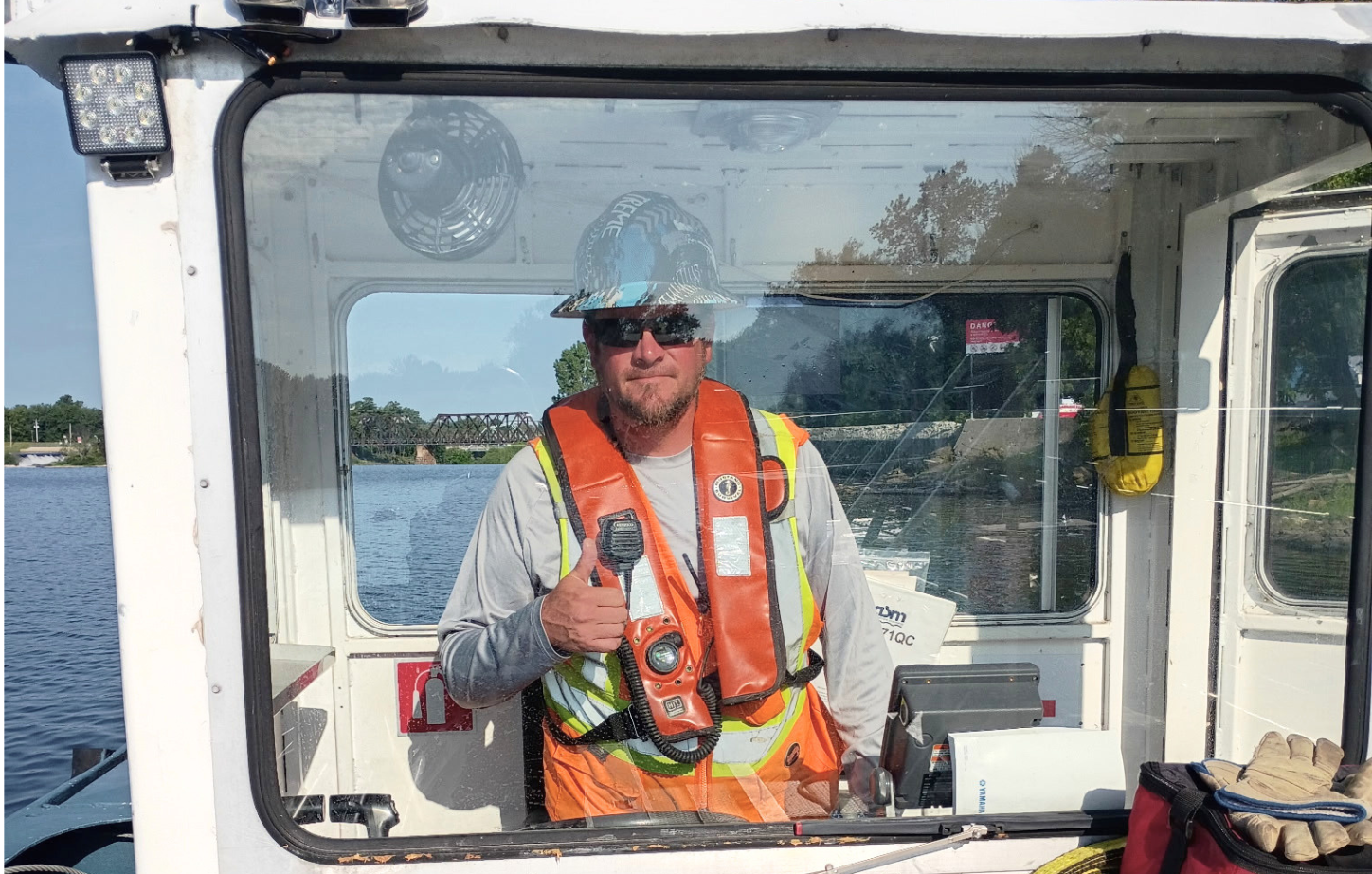
‘’Yes. I started as a deckhand because I was missing two training courses to become a captain. I completed them last spring, after six months on the job. I started working for them in September last year, so it's been a little over a year now. Today, I'm the captain aboard the Atlantique 8, a push tug used to move barges and transport equipment needed for Hydro-Québec's dam repair work.‘’
Did your experience and the training you'd already completed make your transition to the captain's position easier?
‘’Yes. I'd already completed almost all the required training. You also have to accumulate what's called ''sea time'' before obtaining this certification. In other words, you have to have worked aboard a vessel, and fortunately, I had all that experience.‘’
Now that you're a captain, do you want to continue advancing in the maritime industry, or have you reached the goal you set for yourself?
‘’Right now, I'm very satisfied with the path I've taken. Every experience and every training program has helped me move closer to my goal of becoming a captain.‘’
As a member of the Abenaki community of Odanak (Centre-du-Québec), do you think that First Nations people are well-informed about career opportunities in the maritime industry?
‘’I think there's still work to be done to promote jobs in the maritime sector. Very few people know what I do for a living. Often, when I explain it to them, they have a ton of questions. I’ll admit that you don’t hear much about the maritime industry when you’re looking for a job, especially in Indigenous communities.‘’
What has made the biggest impression on you or surprised you the most throughout your career in the maritime sector?
‘’The farthest west I’ve gone is Detroit, which is connected to the Great Lakes system and the St. Lawrence Seaway, and the farthest east is Prince Edward Island. We often have the chance to explore the places where we work, stay in hotels, and eat at restaurants.‘’
With your new responsibilities, do you still have to be away for long periods of time?
‘’Not right now. I couldn’t ask for a better schedule; I work four days a week, Monday through Thursday, 10 hours a day. It’s wonderful.‘’
What has been the most valuable thing the maritime industry has given you so far?
‘’I really love my career and the job stability it offers me. The maritime sector will always need workers, which makes it a field with plenty of job opportunities.‘’
What message would you like to share with a young person or someone looking to change careers who is considering joining the maritime sector?
‘’I would tell them that the maritime sector offers excellent job stability and good working conditions. Contrary to what many people think, not all maritime jobs are very physically demanding. There’s room for a variety of skill sets, and these aren’t just manual labor jobs. Of course, some positions require specific physical abilities—think, for example, of those who sail in the Far North. However, many companies need people from all walks of life. The sector offers good working conditions, competitive salaries, and benefits.‘’
Training and career advancement opportunities are also a great perk!
‘’Yes. The ''fun'' thing about training is that it doesn’t necessarily have to be done all at once. Someone who’s already working could, for example, take advantage of a week of vacation to attend a training session, then continue their career path step by step.‘’
Do employers support employees who want to take training courses and advance in their careers?
‘’Yes, employers are generally very open to this. They sometimes even cover the costs of training. They strongly encourage their employees to develop their skills and are happy to see them advance in the industry.‘’
Does Maxime's journey inspire you? Explore the training programs and numerous career opportunities offered by the maritime sector here!